The Early History of Davenport
Published on March 12, 2026
Davenport is the largest of the Quad Cities, which includes Bettendorf, Rock Island, and Moline. eATLAS has partnered with the Moline Centre on a pair of free Adventures: The 5th Avenue Tour visits 20 historic sites on Moline’s main street, starting at the former Le Claire Hotel, named after Davenport founder Antoine Le Claire. The River Drive Adventure takes you to 16 spots on what was once the city’s commercial district. You can get started by downloading the app at the App Store or Google Play.
By Dave Lifton (@daveeatschicago)
The defeat of the Sauk, Meskwaki, and Kickapoo during the Black Hawk War of 1832 resulted in those tribes selling 6 million acres of what is now eastern Iowa to the U.S. government for $20,000 a year for the next 30 years. At the treaty-signing, Sauk Chief Keokuk gave land to the interpreter, Antoine Le Claire (himself half-Potawatomi) and his wife Marguerite (who was ¼ Sauk) on the condition that they build a home at the spot where they were standing.
Le Claire was also given land on the other side of the river that would soon become Moline, Ill.
The next spring, after ratification of the treaty, Le Claire built a log cabin on the site and became the postmaster and justice of the peace for the area. In 1836, Le Claire and seven others each put up $250 to form a company to develop a town. One of the men, Maj. William Gordon, surveyed and platted the site, from the river to 7th St. (north), and Harrison St. (west) to Warren St. (south). Le Claire chose to name the new town after an old friend who was also part of the company and lived on Rock Island: Col. George Davenport.
However, there were potentially squatters’ claims to some of the land, and, as such, the auction for the lots did not go as they had hoped. In total, only 50-60 lots were sold, mostly to speculators from St. Louis who paid anywhere from $300-600 per parcel.
Then part of the Wisconsin Territory, Scott County was formed on Dec. 21, 1837, and with that came the need to choose its seat. An election in August 1838—one month after the formation of the Iowa Territory—saw Davenport triumph over Rockingham, but it was alleged that “11 sleigh loads” of drunken miners from Dubuque were brought in to vote for Davenport, and the results were voided. A second vote turned up similar shenanigans on both sides, and a third election called. This time, the town of Winfield also threw its hat into the ring. But Davenport had more money and land to donate for the county buildings, and prevailed.
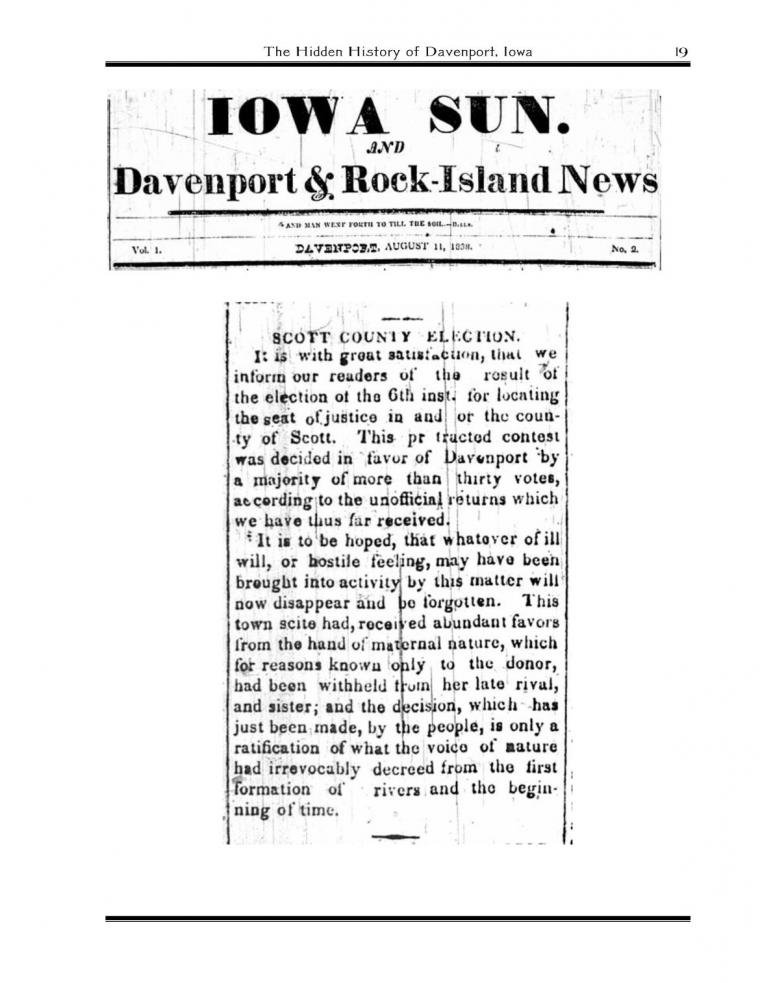
Davenport was incorporated as a city on Jan. 25th, 1839, with Rodolphus Bennett elected mayor that April 1st. On Dec. 28th, 1846, Iowa was granted statehood, and, the next year, Davenport had the last laugh against its rival by absorbing Rockingham into its city limits.
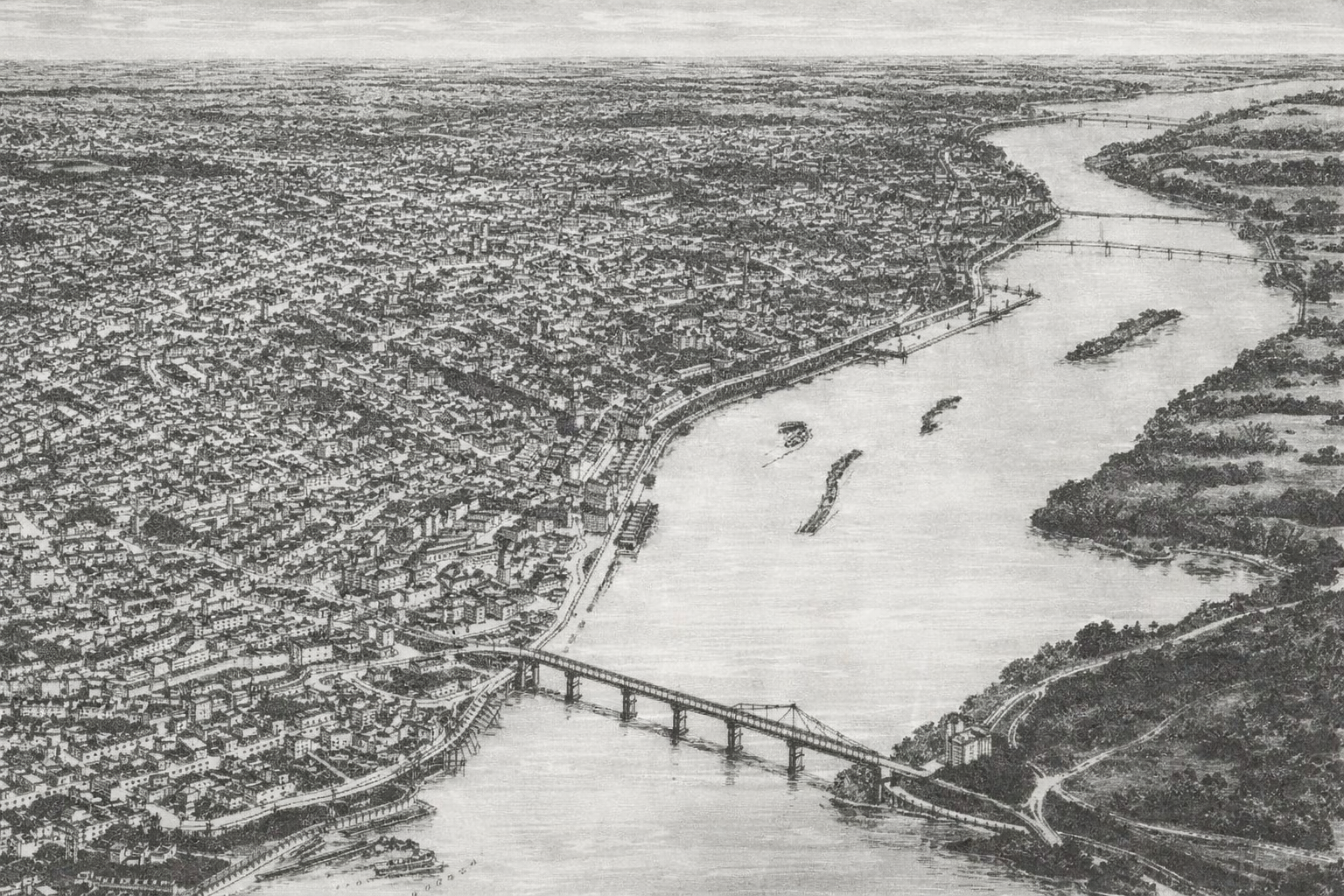
In 1856, America’s first railroad bridge to span the Mississippi River was completed, connecting the Iowa-length Mississippi and Missouri Railroad, which terminated in Davenport, with the Chicago and Rock Island Railroad on the other side of the river. But on May 6th, only 15 days after its opening, the steamship Effie Afton crashed into one of the spans, destroying the boat and the bridge.
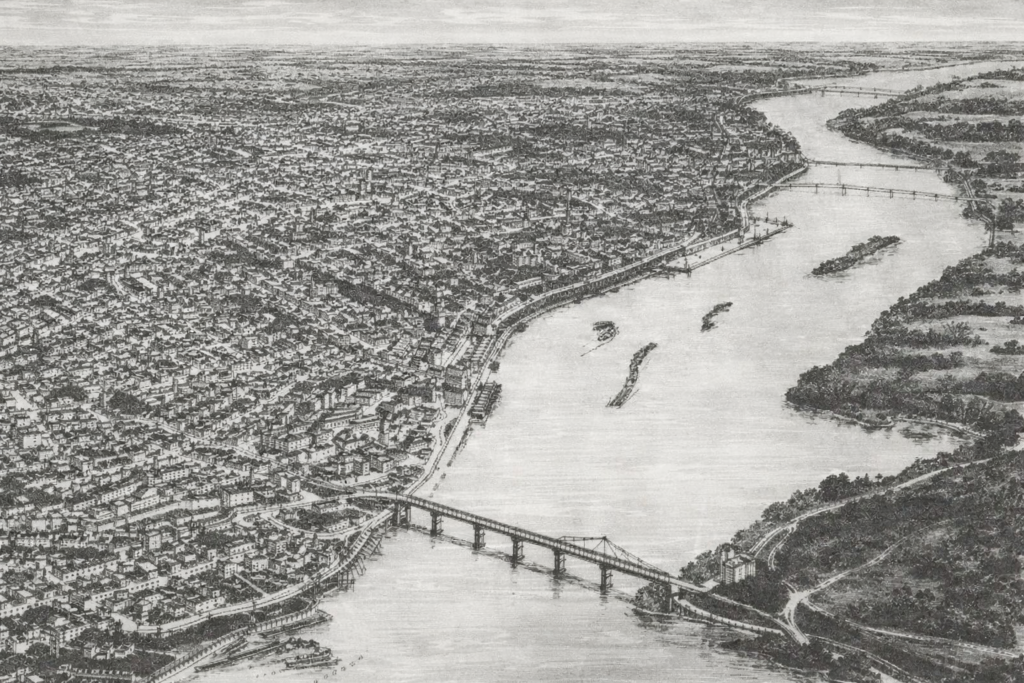
Within four months, the bridge was rebuilt, but the ship’s captain, John Hurd, sued the railroad on the grounds that the bridge piers affected the current and caused the ship to veer into it. The Rock Island’s defense was that it was intentional, because a ship driven out of control would have stayed in the current and avoided the bridge. The case resulted in a hung jury, and therefore a victory for the railroad and its lawyer. Abraham Lincoln.
From the time Davenport was first settled, Germans from Schleswig-Holstein started migrating to the city. Another 100 or so arrived in 1847 as exiles during political upheaval in their homeland, and they soon planted roots, mostly west of Harrison St. A German newspaper, Der Demokrat, began publication in 1851, and butchers, taverns, social clubs, and entertainment venues popped up in the city.
Although they came from all over Germany, Schleswig-Holstein was the dominant state, with 3,022 migrants to Scott County—71.9% of the Germans who specified their region of origin—coming from there between 1842 and 1930.
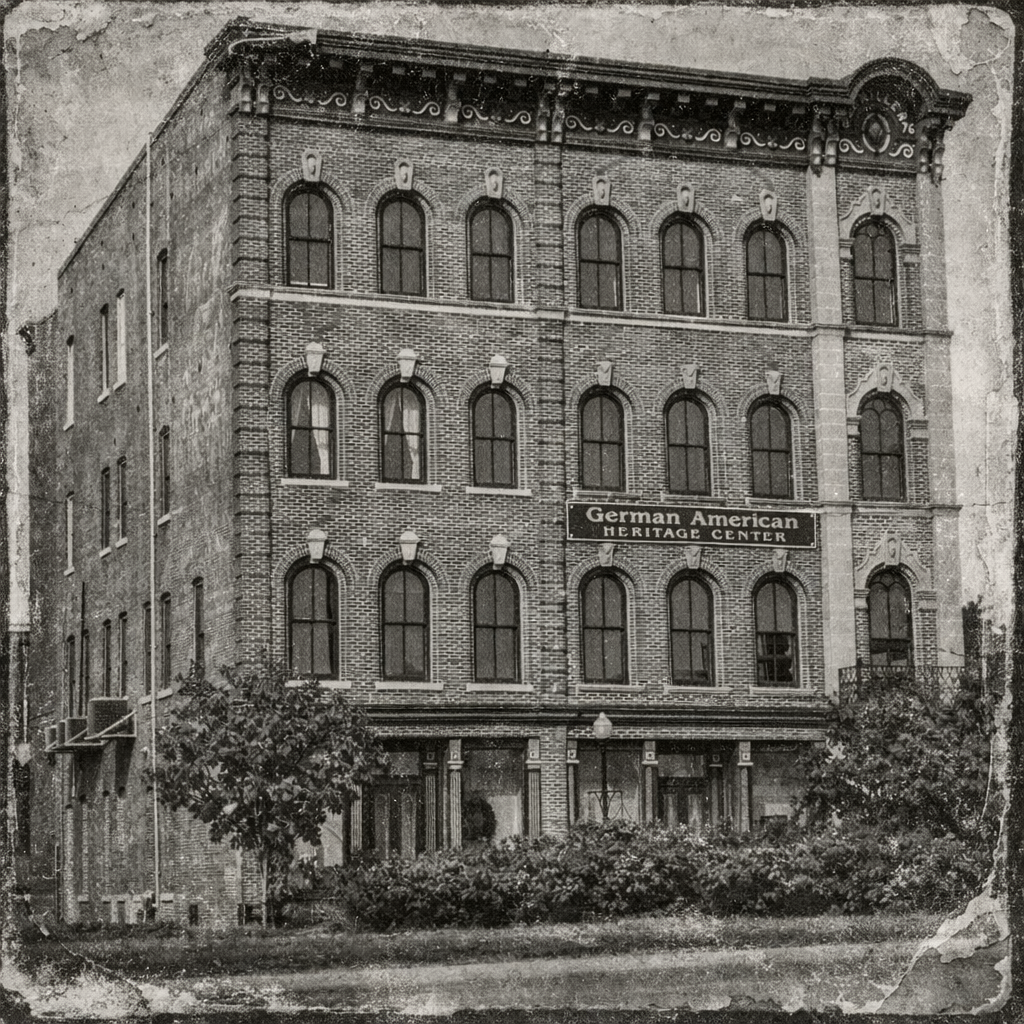
Founded in 1994, the German American Heritage Center & Museum is dedicated to preserving the history of the German immigrant experience in the Midwest. It’s located in the Germania House, which was built in 1862 as a place where newly arrived Germans could stay, and has also served as a hotel. The GAHC+M purchased the building—saving it from demolition—in 1995, restored it, and reopened it in 2000, with permanent and temporary exhibits, and a children’s activity space that opened in 2024.

The Adventure starts when you say it does.
All eATLAS Adventures are designed and built by experienced eATLAS Whoa!Guides. They're always on. Always entertaining. And always ready to go.
Check out our Adventures!