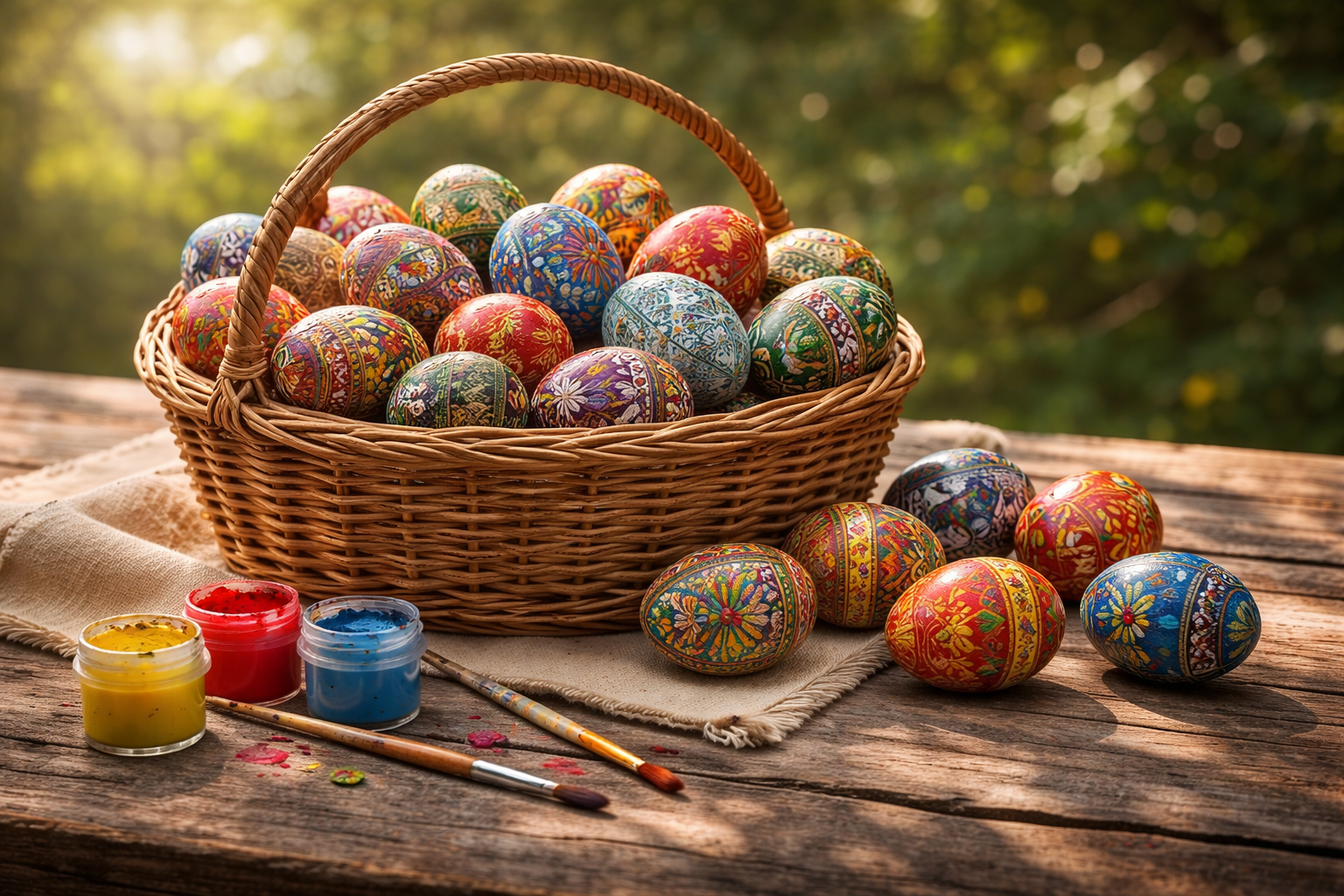
The History of Easter Eggs
Published on March 27, 2026
eATLAS has partnered with Moline Centre on the Spring Egg Hunt. The Adventure requires players to search for eggs placed in numerous businesses in downtown Moline for the chance to win prizes from March 20th – April 5th. You can get started by downloading the eATLAS app at the App Store or Google Play.
By Dave Lifton (@daveeatschicago)
The earliest recorded instance of coloring eggs can be traced back 60,000 years, when Kalahari Bushmen in Southern Africa hollowed out ostrich eggs and used them to transport water. It’s unknown why the eggs would be decorated, but it could possibly be to denote ownership or simply to make them look nice.
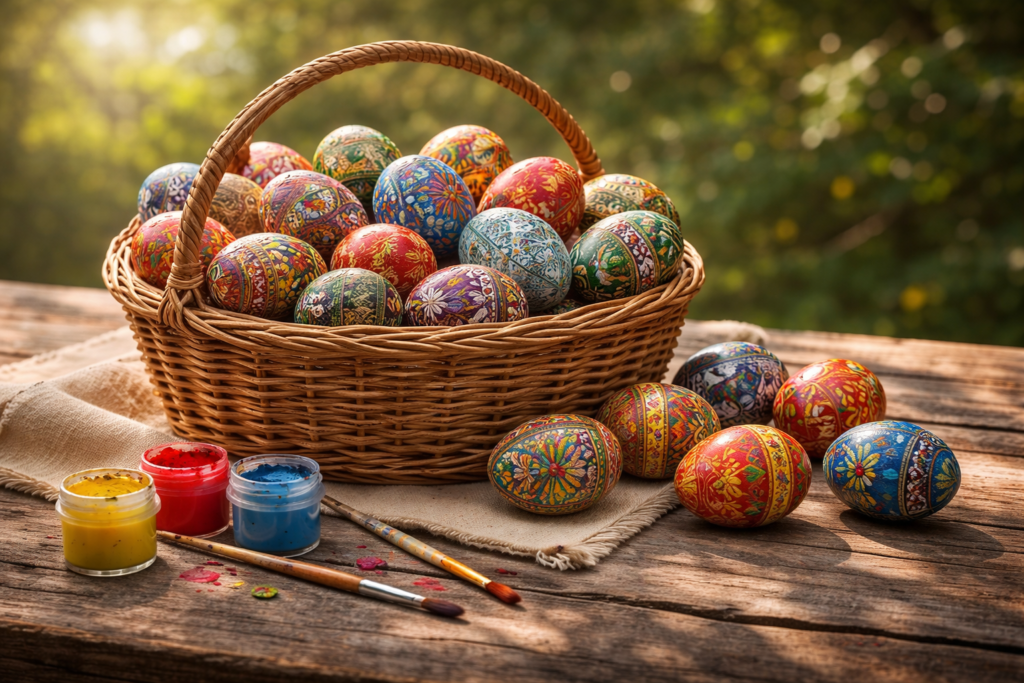
As with many traditions that are common to Halloween and Christmas, the coloring of eggs at Easter can be traced back to pre-Christian times, when they were used as symbols of rebirth in spring celebrations in many societies. The Shemu festival in Egypt, which began about 4,700 years ago, commemorates the period in mid-May when the Nile River is at its lowest point until the beginning of the flooding season. They’re found on the Haft-sin table during Nowruz, an Iranian New Year’s festival first practiced by Zoroastrians 2,500 years ago. Ukrainians had also created ornate pysanky and exchange them as gifts prior to the arrival of Christianity in 988, after which they were incorporated into their Easter rituals.
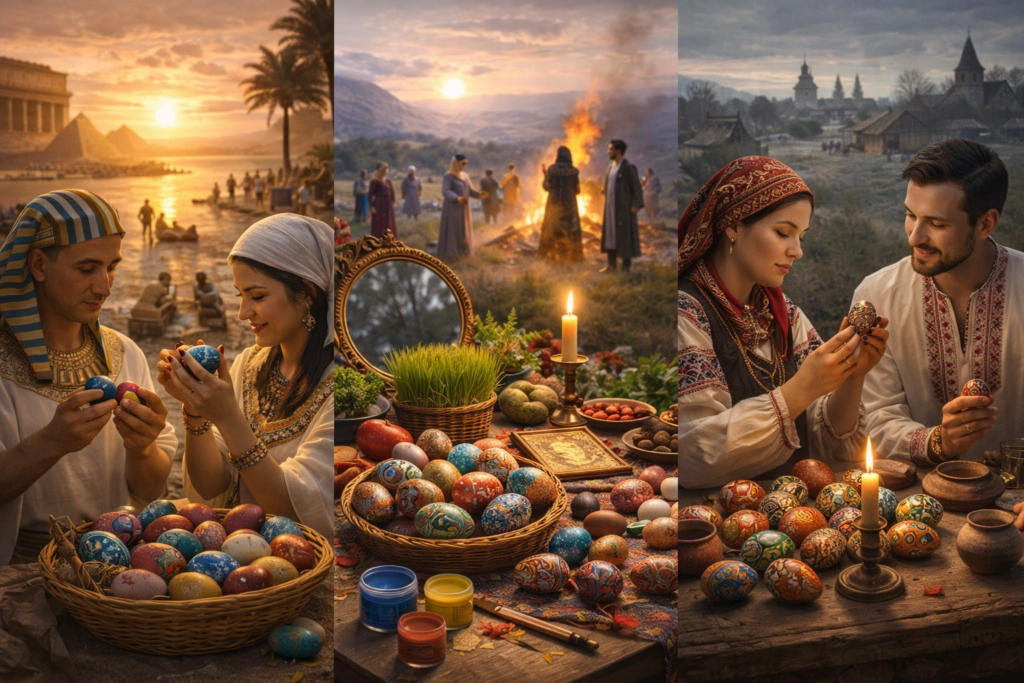
In Judaism, a hard-boiled or roasted egg is featured on the Seder plate during Passover, where it represents both spring and the ritual sacrifice made for the meal back in biblical times. Theologians have long debated whether the Last Supper was a Seder. If it wasn’t, there is another tale told in some Eastern Orthodox traditions that ties eggs to the story of Resurrection.
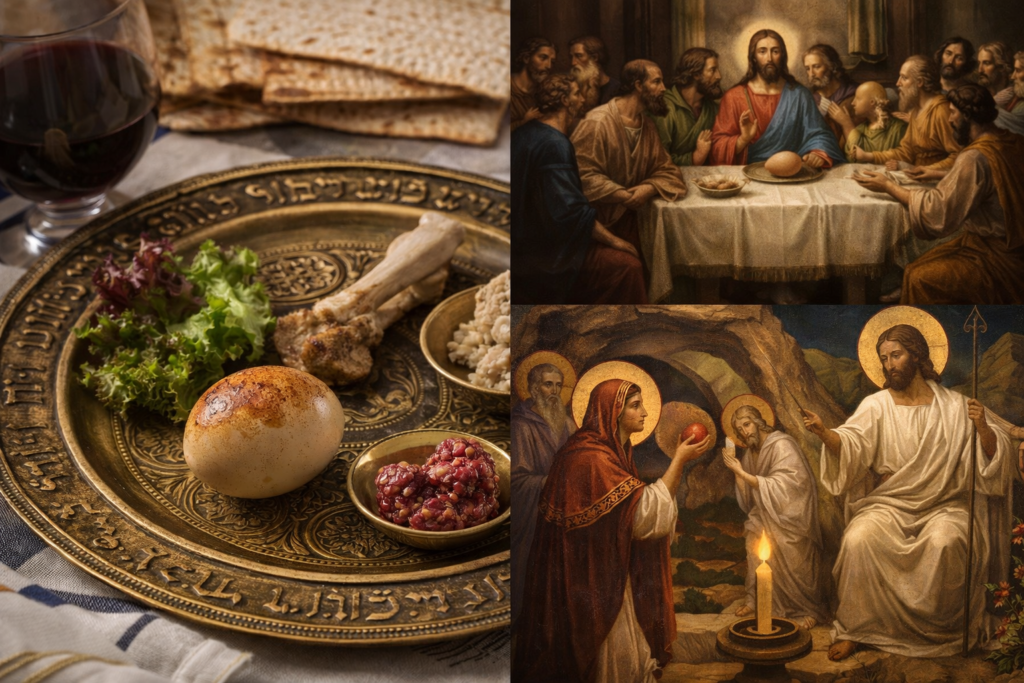
After the Resurrection, Mary Magdalene went to Rome to see Emperor Tiberius. She held out an egg and said, “Christ Is risen!” Tiberius scoffed, saying that the odds of that happening were about the same as the egg turning red. At that moment, the egg proceeded to turn red. A variation has her bringing eggs to Jesus’ tomb, at which point she discovered that the stone had been rolled away and the eggs had taken on bright hues.
Over time, the eggshell became symbolic of the tomb, cracking to allow new life to come from it, with red representing the blood shed by Jesus during the Crucifixion. During the Middle Ages, the consumption of animal products became forbidden during Lent. Eggs became important because they could be boiled to preserve them and stored in advance of the Easter feast. The practice of gifting them is believed to have started in 1290, when England’s King Edward I purchased 450 eggs, decorated them with gold leaf and distributed them to his royal party.
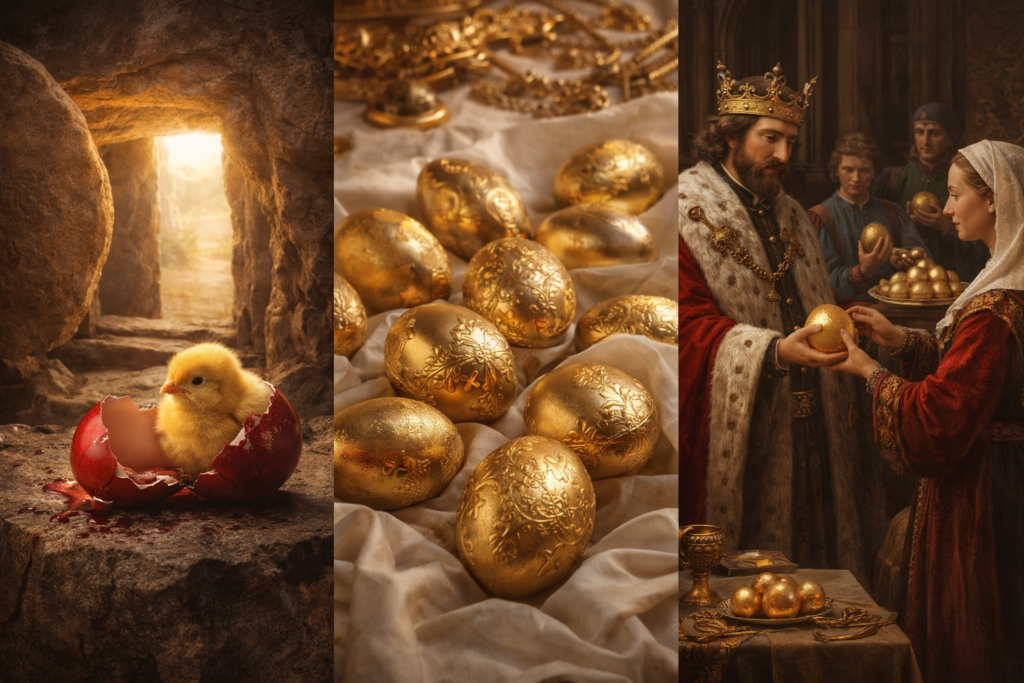
Easter eggs were officially adopted by the Catholic Church in 1610 when it was published in the Roman Ritual as part of the Easter Blessings of Food. By that time, it’s possible that hunts had already begun. It’s often been said—but not proven—that, in the 16th century, Martin Luther organized them for his congregation, with men hiding eggs for women and children to find, because women were the first to discover Jesus’ empty tomb.
If that’s not true, it is known that, in 1682, a German physician named Georg Franck von Franckenau wrote of a folktale where the Oster-Hase (Easter hare) had its eggs hidden in a garden for children to find. It’s likely that the Ostre-Hase—which has morphed into the Easter Bunny—owes its origin to feasts that Anglo-Saxon pagans had throughout April to honor the goddess Ēostre, with the hare seen as a symbol of fertility. Ēostre is believed to be the derivation of “Easter.”
The legend of the Oster-Hase arrived in America via the Pennsylvania Dutch, who fled Germany in the 1700s in search of religious freedom. It prompted kids to build nests in their hats and bonnets in which the Oschter Haws (Oster-Hase in their dialect) would lay brightly colored eggs. However, like Santa Claus, the eggs would only appear if kids were well-behaved.
Easter egg hunts arrived in Great Britain through Princess Victoria, Duchess of Kent, who was German. Her daughter, the future Queen Victoria, described one in a letter in 1833, and, a decade later, wrote that she and Prince Albert had held one.
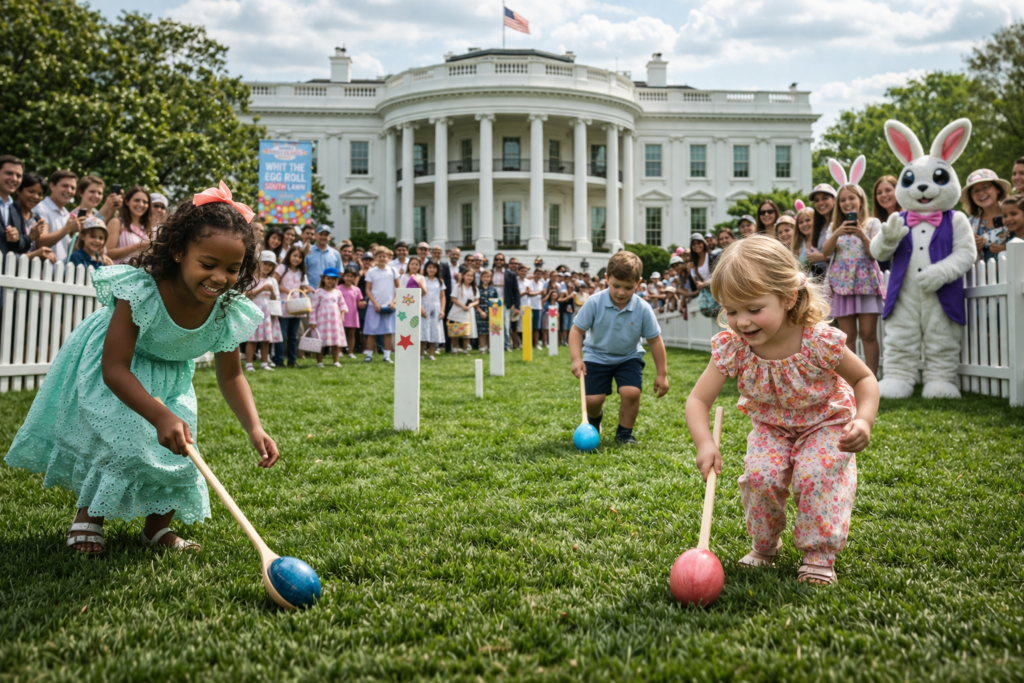
The most famous American celebration involving Easter eggs isn’t a hunt, but the Easter Egg Roll on the South Lawn of the White House. President Rutherford B. Hayes began the tradition on Easter Monday 1878, and has been held every year, except from 1918-20, 1942-52, and 2020-21.
The author has never liked hard-boiled eggs. Or Peeps, for that matter. But he has been known to buy loads of candy shortly after Easter, when they’re deep-discounted.

The Adventure starts when you say it does.
All eATLAS Adventures are designed and built by experienced eATLAS Whoa!Guides. They're always on. Always entertaining. And always ready to go.
Check out our Adventures!