Chicago’s History With Professional Men’s Basketball
Published on January 15, 2026
In 1925, a group of NFL owners decided to branch out into basketball by bringing nine independent teams under the umbrella of the American Basketball League. George “Papa Bear” Halas had founded the Chicago Bruins the year before, and installed himself as coach. For the first ABL season, the Bears’ quarterback, Laurie Walquist, served as player-coach, and the team went 6-10 in the first half of the split season, and 3-11 in the second. The Bruins’ tallest player was center Edward “Stretch” Miller, who stood 6’3.
By Dave Lifton (@daveeatschicago)
The Bruins did little to distinguish themselves in six seasons before the Great Depression forced the ABL to suspend operations. Their best record came in the second half of that final year, when—with the league down to five teams—they tied for first. But they lost in a two-game playoff to the Fort Wayne Hoosiers.
Four years later, the amateur-in-name-only Midwest Basketball Conference gave Chicago at a second chance. Entering mid-season, the Chicago Duffy Florals (named because they were owned by a South Side florist) went 3-2, good enough for second place in the Western Division. Despite having not played a minimum of 12 games, they were allowed into the playoffs, possibly because the tournament was held at the arena at the White City amusement park. Home court advantage worked, and the Duffy Florals won the championship by upsetting the Indianapolis Kautskys, who were led by future legendary college coach John Wooden, 39-55.
However, the team faltered in its second season, going 4-7. The MBC reorganized a year later as the fully-pro National Basketball League, but without a Chicago franchise.
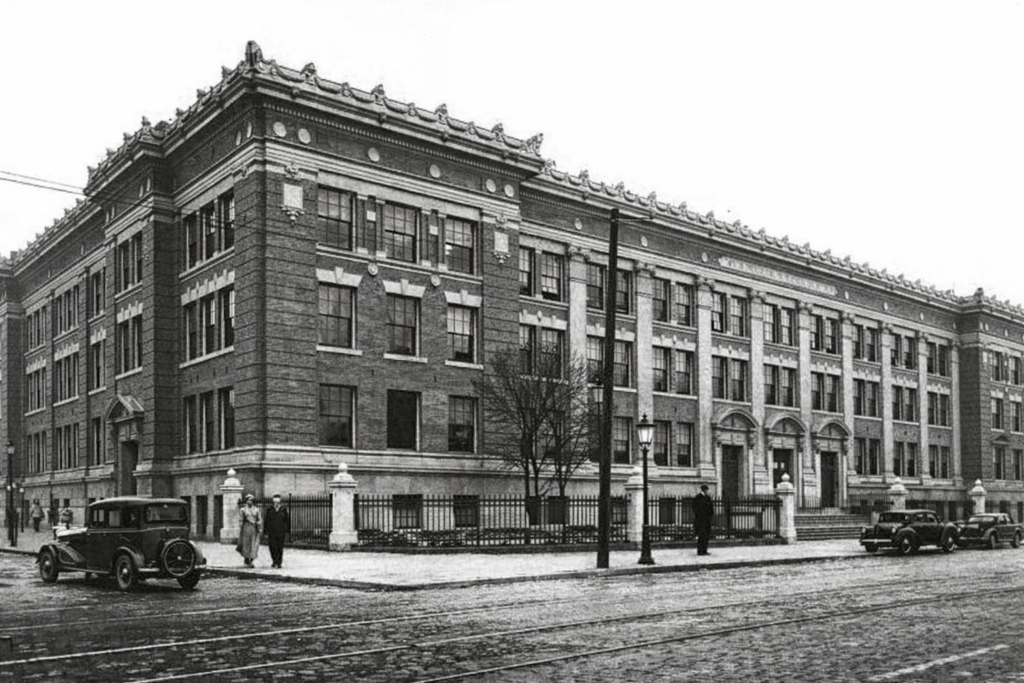
But the most famous team birthed on the shores of Lake Michigan didn’t even take the name of its city. The year after that inaugural ABL season, coach and promoter Abe Saperstein took control of an independent team comprised largely of former students at Bronzeville’s Wendell Phillips High School. As the team expanded its barnstorming, he changed the name to the epicenter of African-American life to make it clear this was an all-Black team, and threw in a bit of showmanship to suggest that they had been all over the world.
The Harlem Globetrotters were officially born.
Originally, they played serious basketball as they traveled the Midwest and beyond. In 1939, they were invited to play in the World Professional Basketball Tournament, an invitational sponsored by the Chicago Herald American that featured barnstormers as well as teams from the NBL and the revived ABL. The Globetrotters came in third in the 1939 tournament and won it all a year later. Around this time, they started adding the dribbling wizardry and comedy routines that would make them beloved around the world, but only when they had an insurmountable lead.
Back in the Windy City, pro basketball failed to take hold. Halas revived the Bruins for the NBL from 1939-42, never doing better than a 14-14 record in that first season. For 1942-43, the United Auto Workers fielded a Chicago team, the Studebaker Flyers, that equally underwhelmed in its only year of existence. But they earned the distinction of being the first integrated basketball team in a nationwide pro league.
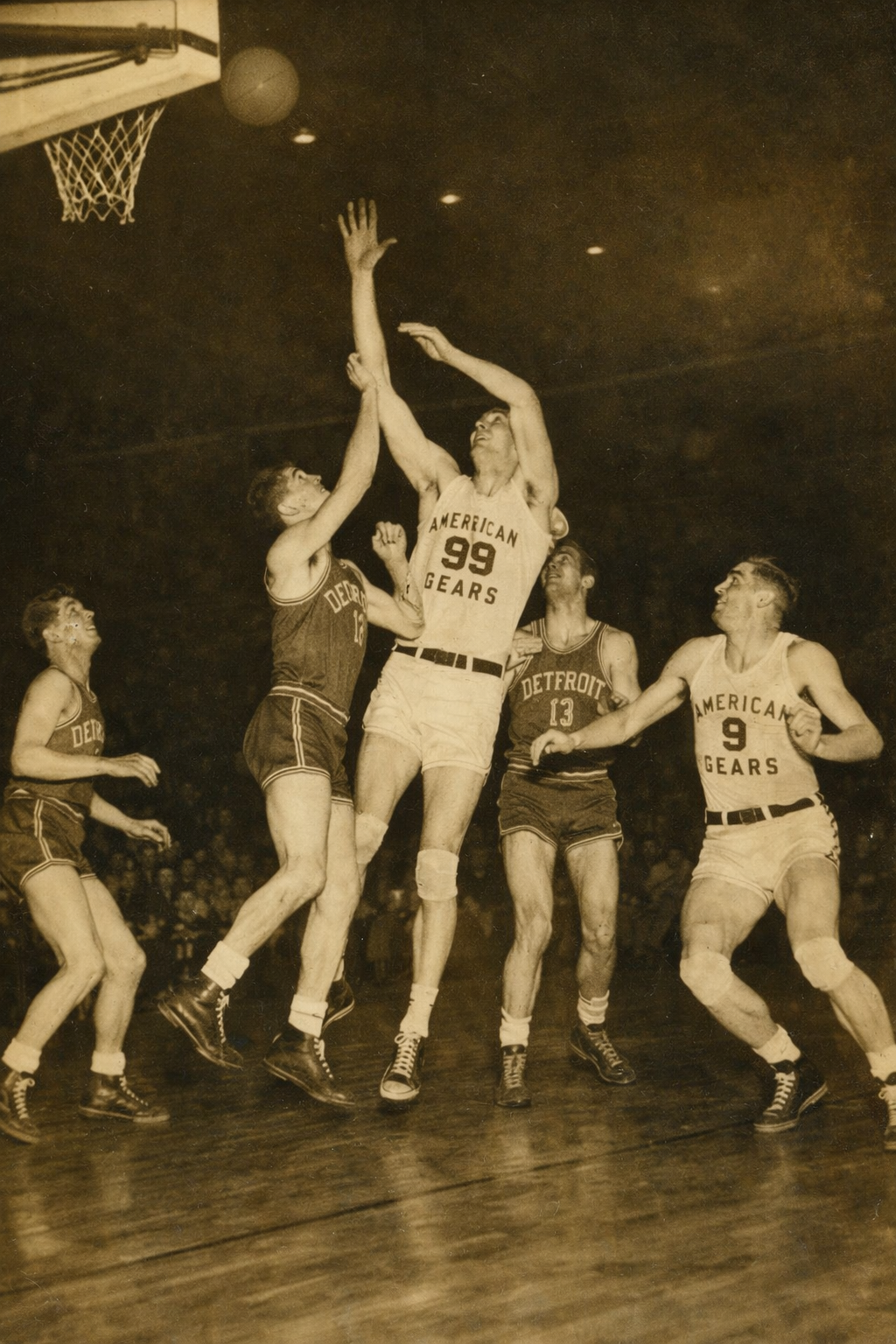
The American Gears became the third NBL squad from Chicago, and finally brought success. After two seasons around the .500 mark, they signed 6’10 rookie center, and DePaul standout, George Mikan, who led them to the 1946-47 NBL title.
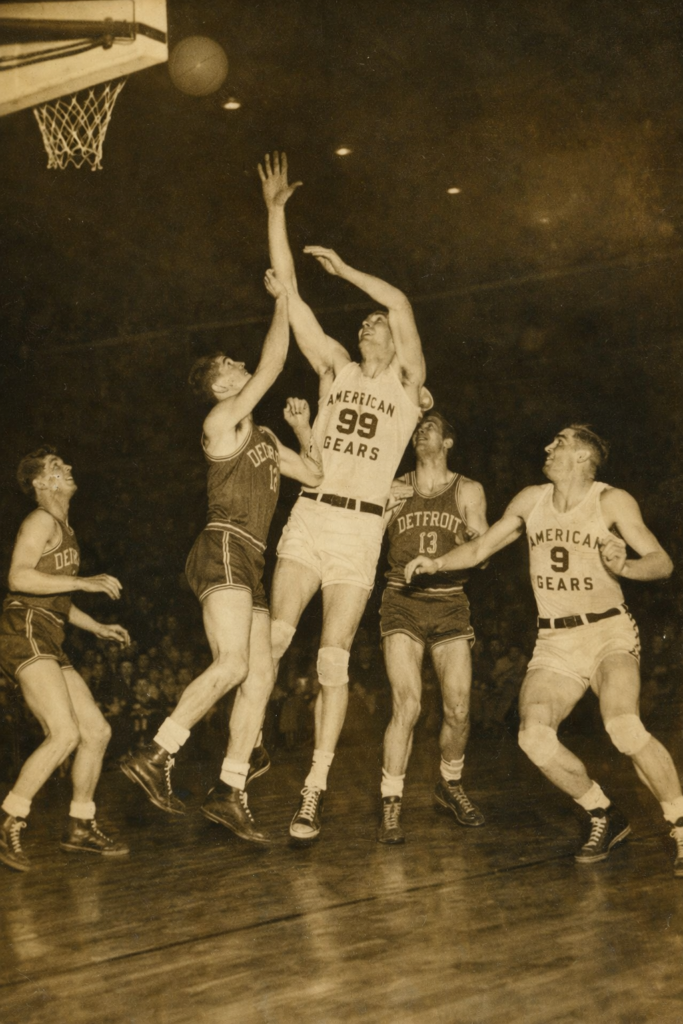
However, Gears owner Maurice White feuded with the other owners, and then pulled his team out of the NBL in favor of his own Professional Basketball League of America. But his venture lasted a month into the 1947-48 before folding.
While the American Gears were bringing basketball glory to Chicago, another league, the Basketball Association of America, was getting started. The Stags were pretty good, losing in the finals to the Philadelphia Warriors in 1946-47 and reaching the semis the next two years. After the 1948-49 season, the NBL and BAA merged to form the NBA. Again, the Stags were respectable, but lost to the Minneapolis Lakers, who signed Mikan after the Gears busted, in the first round of the playoffs.
As good as the Stags were on the court, they flopped at the box office and folded before the start of the NBA’s second season. It took a decade for the NBA to come back to Chi-town, and it wasn’t pretty. The Chicago Packers, so named because its home, the International Amphitheater, was next to the Union Stock Yards, had the worst record in the league in 1961-62. Perhaps because no Chicago team should share a name with Green Bay’s football team, they became the Zephyrs and moved to the Chicago Coliseum. But the results weren’t much better and, after losing $400,000 in two years, they moved to Baltimore the next year, and are now the Washington Wizards.
Chicago wasn’t without basketball for too long. In January 1966, the NBA awarded an ownership group led by former Gears player Dick Klein. Wanting a name that drew upon the city’s history with meatpacking, he happened upon the Bulls. As with most of Chicago’s defunct teams, it struggled on the court, winning only three playoff series in their first 20 years. But the ascendancy of Michael Jordan in the mid-‘80s, and dominance in the ‘90s, made Chicago synonymous with basketball for fans all over the world.
As the tallest of his friends at a lanky 6’2, the author could rebound and block, and had an oddly decent skyhook. But his overall lack of strength meant he often got pushed out of the paint.

The Adventure starts when you say it does.
All eATLAS Adventures are designed and built by experienced eATLAS Whoa!Guides. They're always on. Always entertaining. And always ready to go.
Check out our Adventures!