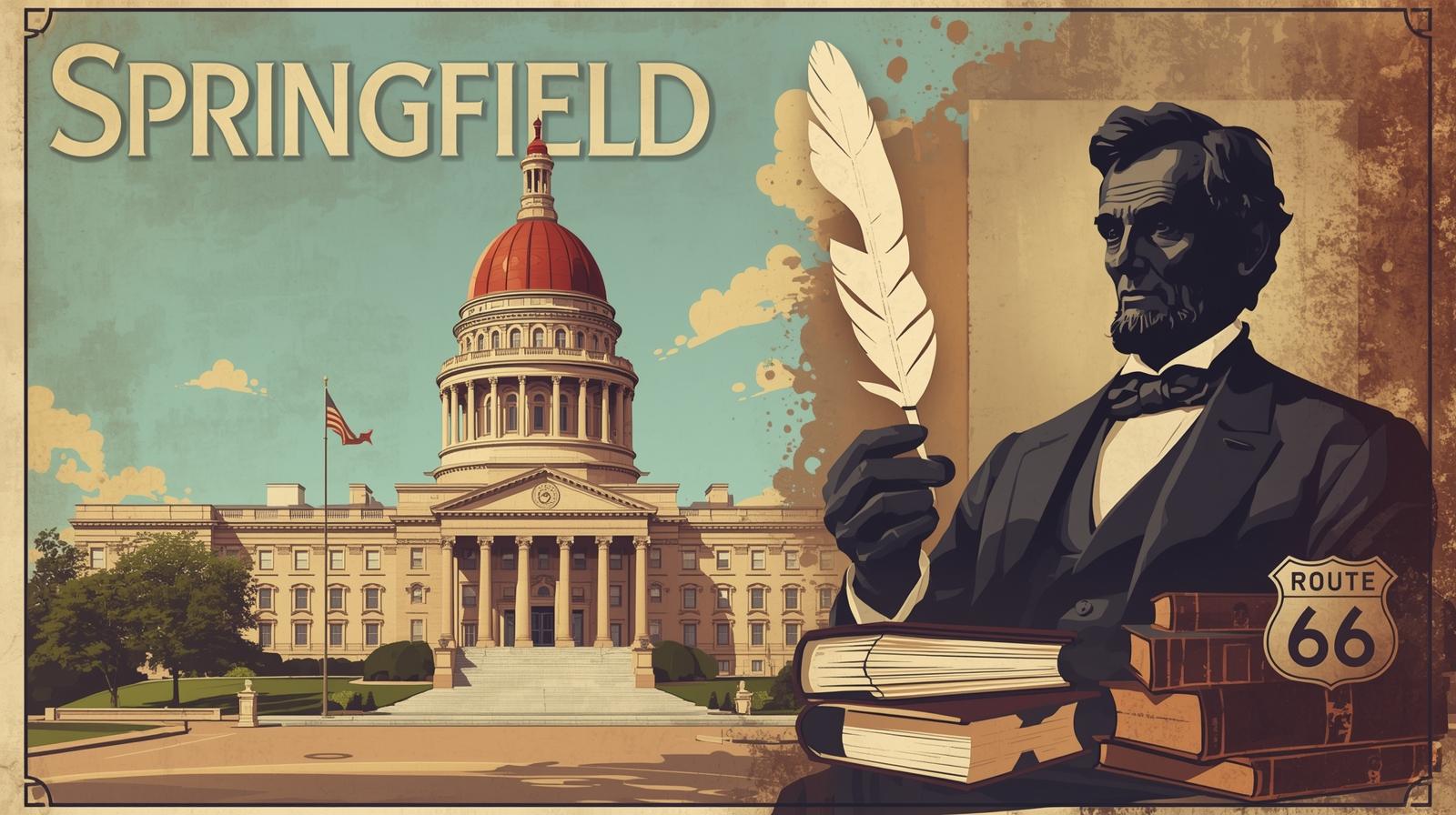
Discover Springfield: Illinois’ Capital and Lincoln’s Home
Published on December 11, 2025
eATLAS’ new Food and Drink Crawl of Downtown Springfield visits 13 restaurants and bars in the heart of the city.. Participants receive a t-shirt which guarantees discounts at many of the locations.
By Dave Lifton (@daveeatschicago)
Shortly after Illinois was granted statehood in 1818, John Kelley left North Carolina for quieter pastures out west and a year later, built a cabin in a spot of unincorporated land near Spring Creek. In early 1821, the land would become part of the newly created Sangamon County, and three men—Zachariah Peter, William Drennan, and Rev. Rivers Cormack— had to find a location for a temporary county seat.
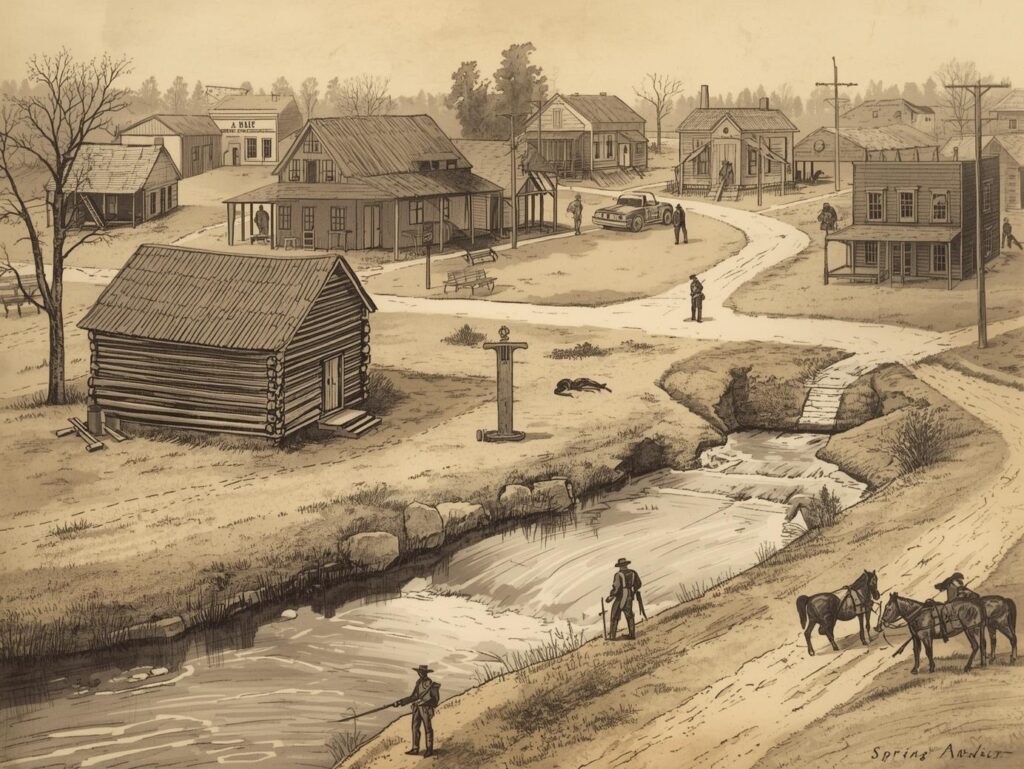
After a meeting at Kelley’s house, they drove a stake in a spot to denote where the courthouse would be constructed, by Kelley, at a cost of $42.50. The area took on the unofficial name of Springfield, possibly after Spring Creek, with Charles R. Matheny named as county clerk and John Taylor as sheriff.
Elijah Iles, a Kentuckian who relocated to the area and constructed a general store, made a four-by-six-blocks street grid, and became the postmaster. Taverns and churches followed. Iles, Pascal P. Enos, and Thomas Cox, each purchased one-fourth of the 640-acre land parcel for $1.25 an acre in November 1823. On the plat filed a month later, they changed the name to Calhoun, after then-Secretary of War John C. Calhoun.
But it never took as a name, possibly because of the South Carolinian’s staunch defense of slavery, and it was changed back to Springfield by the time it was chosen as the permanent seat of Sangamon County on March 18th, 1825. Competing with Springfield was a locale that had no construction on it, but the land was owned by William S. Hamilton, one of Alexander Hamilton’s sons and a member of the Illinois House of Representatives. Further growth followed, and Springfield was incorporated as a town on April 2nd, 1832.
Two years later, Abraham Lincoln, from nearby New Salem (now Petersburg), was elected to the Illinois House of Representatives as a member of the Whig Party. One of his major accomplishments during his four terms was as a leader of the “Long Nine,” a group of state senators and assemblymen so named because their average height was six feet, who fought to change the state capital from Vandalia to Springfield, which was ratified by the General Assembly on Feb. 28th, 1837.
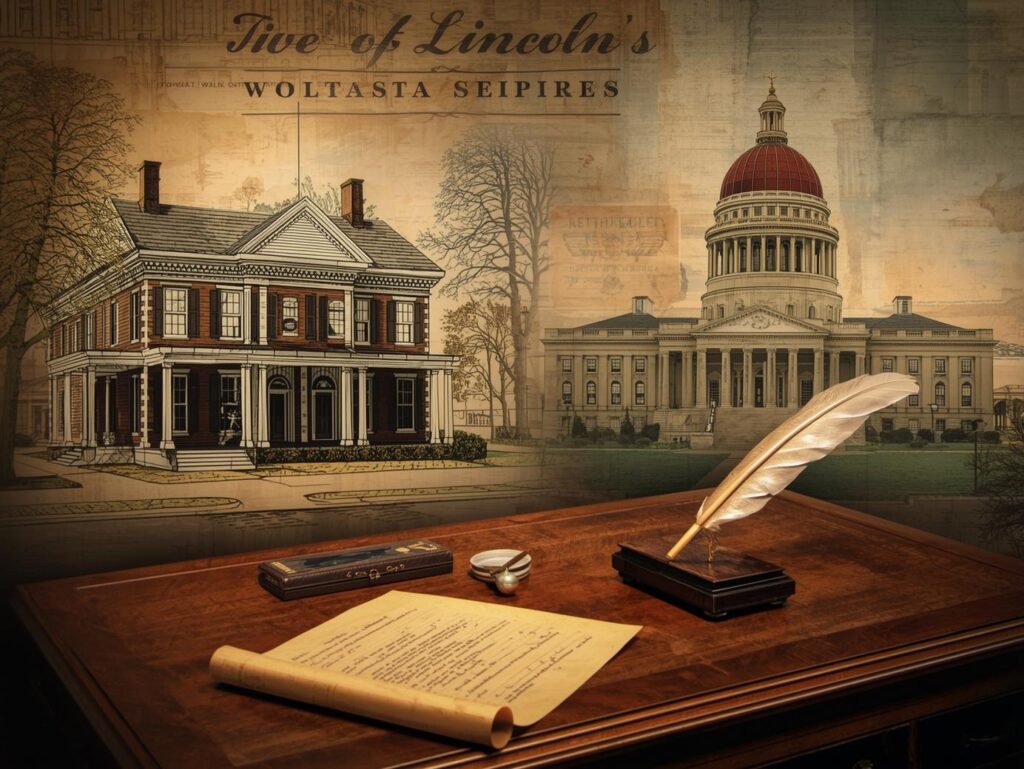
A few months after its passage, Lincoln moved to Springfield, which remained his primary residence and law office until he was inaugurated as the 16th President of the United States in 1861. His home on S. 8th St. is a National Historic Site and the Abraham Lincoln Presidential Library and Museum is two blocks away.
The relocation of the capital city began in 1839, by which point construction of the new capitol was well underway. Starting in 1840, the red-domed building served as the statehouse, becoming the spot where Lincoln delivered his “House Divided” speech in 1958 and, tragically, where his body vas viewed by an estimated 75,000 people—five times the population of Springfield at the time—before it was entombed at Oak Ridge Cemetery. In February 2007, another former Illinois state legislator, Barack Obama, announced his candidacy for the presidency in front of the capitol.
Springfield adopted a city charter in 1840, at which point its population was 2,579. But the fight was not without drama. A debate over whether non-U.S. citizens could vote in city elections turned violent, with state Sen. Edward Baker and Dr. Alexander Shields taking their disagreement out into the street in a full-on brawl. The two men were fined $15 and eventually became friends.
Before long, the capitol was ill-equipped to meet the needs of a rapidly growing state, and the current building held its first legislative session in 1877, although it wasn’t completed until 1888. The Old State Capitol transitioned into the courthouse for Sangamon County and underwent numerous changes until it was closed in 1966. It has since been restored to its original look and is open for tours.
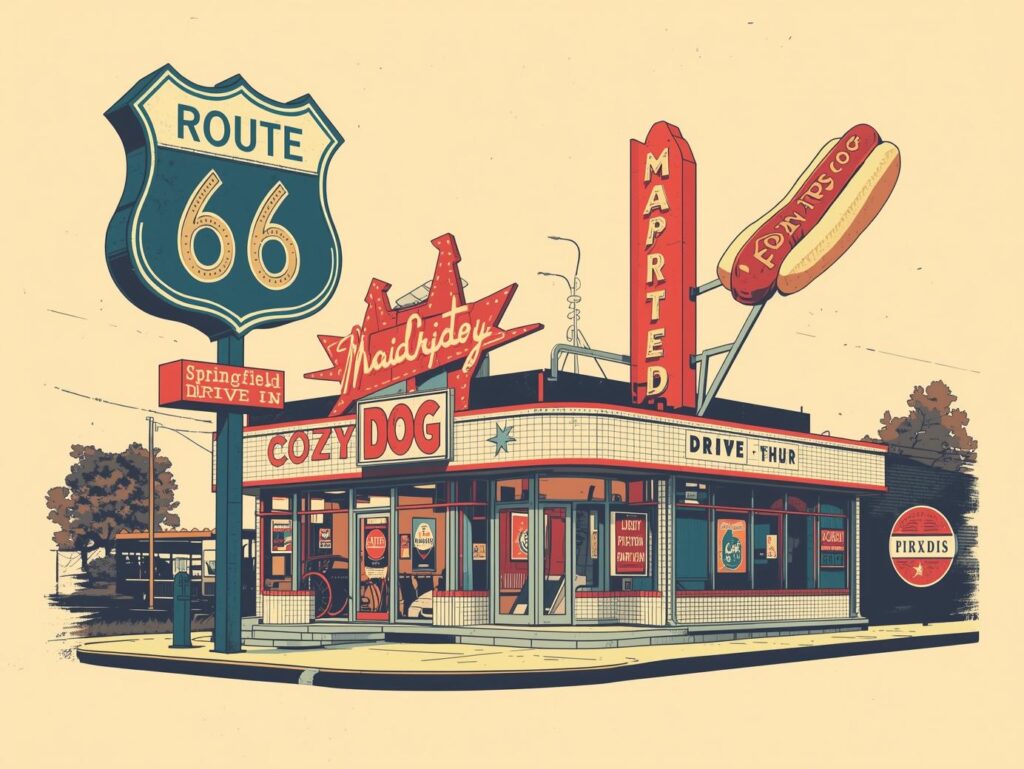
In 1926, Route 66 opened up, with its original alignment running through Springfield. Although the “Mother Road” has since been largely replaced by high-speed expressways, its importance can still be felt throughout the city. The Maid-Rite Sandwich Shop, which opened in 1924, is America’s first drive-thru restaurant, and the Cozy Dog Drive In is the birthplace of the corndog. The Illinois State Fairgrounds’ Route 66 Experience celebrates its history, with neon signs, advertisements, and other artifacts from 92 communities in the state that the road touched. In 2025, a quarter-mile section of Route 66 that runs through Carpenter Park was reopened to foot traffic.
With a population of 114,000 residents and more than 200,000 in its metropolitan area, Springfield is currently the seventh-largest city in Illinois, a far cry from the remote place John Kelley settled because he wanted to get away from it all.

The Adventure starts when you say it does.
All eATLAS Adventures are designed and built by experienced eATLAS Whoa!Guides. They're always on. Always entertaining. And always ready to go.
Check out our Adventures!